
On this page
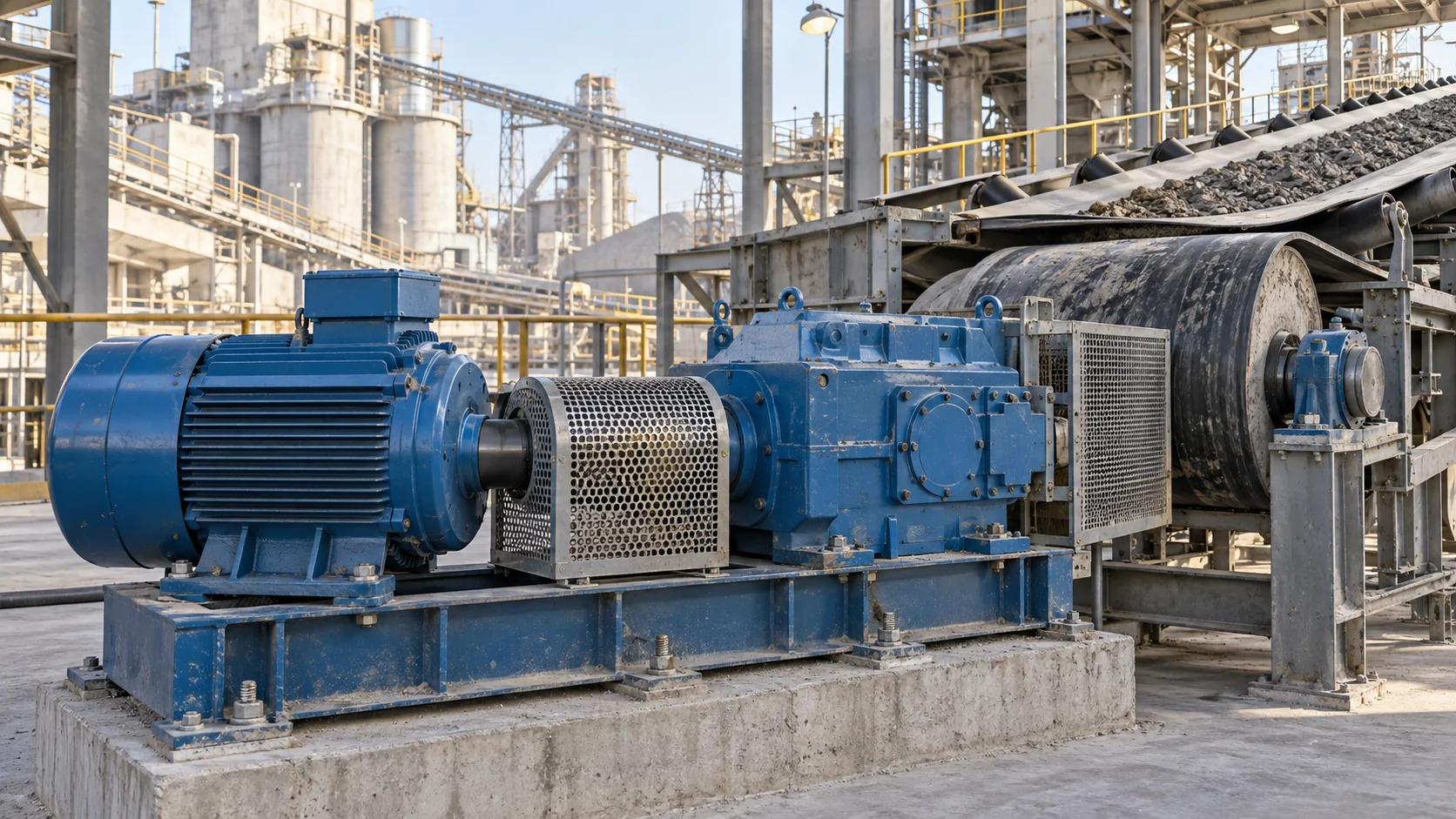
A cement plant uses mechanical drives at several stages, but the requirements are not interchangeable. Conveyors move bulk material, mills rotate under demanding loads, and kiln drives maintain controlled rotation through a continuous thermal process. Each application calls for its own assessment of torque, speed, load variation, mounting and operating environment.
This article identifies common gearbox duties and the information needed to discuss a suitable drive arrangement. The final selection depends on the actual machine and its documented operating conditions.
Where gearboxes are used
| Plant area | Driven equipment | Questions to resolve |
|---|---|---|
| Material receiving and preparation | Conveyors and bucket elevators | How does the equipment start when loaded? Are blockage or reverse-running conditions possible? |
| Raw material or cement grinding | Mills and associated material-handling equipment | What are the starting, continuous and peak loads? How is torque transmitted to the mill? |
| Pyroprocessing | Rotary kiln drive | What speed range and low-speed torque are required? How are starting and auxiliary operation handled? |
| Clinker cooling and transfer | Rotary cooler and conveyors | What are the operating load, material temperature near the equipment and site conditions? |
| Material classification | Dynamic separator | What operating speed range and control method are required? |
The table describes application areas, not a list of interchangeable gearbox types. Even equipment with similar motor power can require different shaft arrangements and rating checks.
Conveying and bucket elevator drives
Cement production involves repeated movement of limestone, raw meal, clinker and other bulk materials. Belt and apron conveyors, screw conveyors, enclosed conveyors and bucket elevators may each have a different starting and loading pattern.
For a conveyor, establish the normal material load and determine whether the drive must start with material already on the equipment. Include the conveyor length or geometry, required speed, starts per hour and any credible overload or blockage condition. An inclined conveyor or elevator may also require a review of how unintended reverse movement is prevented.
The installation layout matters alongside torque. Specify the drive location, shaft connection, available mounting space and maintenance access. Dust exposure should be described directly so the sealing and lubrication arrangement can be reviewed for the site.
Changzheng’s heavy equipment catalog includes FU type conveyors, LS/GX screw conveyors, BL apron conveyors and NE plate chain bucket elevators. Their drive requirements should still be established from the selected machine and its duty; the equipment name alone does not determine a gearbox size.
Grinding mill drives
Grinding systems require particular care because steady operating power does not describe every condition the drivetrain experiences. A mill drive assessment should include starting behavior, normal running load, potential load fluctuations and the means of transmitting torque to the mill.
Drive arrangements vary. Before comparing gearboxes, confirm whether the gearbox drives the mill through a pinion, another mechanical connection or an arrangement specified by the mill designer. The required output speed, coupling arrangement, shaft loads and lubrication or cooling provisions depend on that layout.
Changzheng’s catalog describes a ball mill for grinding cement raw materials, cement clinker and other industrial materials. For a specific mill inquiry, useful inputs include the mill model and drawings, motor data, intended operating speed, starting method and any available load or operating records. A replacement project also needs the existing drive’s connection dimensions and installation constraints.
Rotary kiln drives
A rotary kiln operates at low rotational speed, while its drive must provide the torque needed under the specified starting and running conditions. Depending on the kiln design, torque may pass through a gearbox and pinion to a girth gear. The gearbox cannot be selected from motor power or kiln diameter alone.
The engineering review should establish the kiln’s required speed range, normal and starting torque, drive arrangement and control method. Where an auxiliary or maintenance drive is part of the system, its operating sequence and relationship to the main drive also need to be defined.
Heat near the process, outdoor exposure and dust can affect the installed drive. State the expected ambient conditions at the gearbox location rather than using the process temperature as a substitute for the gearbox’s ambient temperature. Changzheng’s catalog identifies rotary kilns for cement and other thermal-processing applications; the drive configuration remains specific to each kiln installation.
Cooling, transfer and separation
After kiln processing, clinker cooling and transfer introduce further drive duties. A rotary cooler requires a review of drum speed, transmitted torque, starting conditions and the mechanical drive connection. Downstream conveyors then have their own material load, speed and installation requirements.
A dynamic separator has a different task: its rotational speed may be part of the material-classification control strategy. Its drive inquiry should therefore state the required speed range, control method, operating load and mounting arrangement. Changzheng’s catalog includes a single-drum rotary cooler and raw-meal dynamic separation equipment, but their gearboxes should be assessed against the individual equipment specification.
Conditions that affect every selection
Across these applications, five checks help prevent an incomplete specification:
- Normal and exceptional loads: Distinguish continuous torque from starting, peak, reversing and blockage conditions. Record how long and how often exceptional loads occur.
- Speed and control: Provide the input speed range, required output speed range, starting method and any variable-speed operation.
- Mechanical arrangement: Define mounting position, shaft connection, coupling and external radial or axial loads.
- Thermal and environmental conditions: State operating hours, ambient temperature, dust exposure, airflow and any cooling or lubrication requirements.
- Service access: Check that inspection, oil service and removal can be performed within the available space.
A service factor is part of a manufacturer’s rating method, but it should not replace a description of the real duty. Mechanical strength, short-duration peak loads and thermal capacity need to be reviewed under the applicable selection method.
What to include in a cement plant drive inquiry
For a new drive or replacement gearbox, send the equipment name and process duty together with the available technical information:
- Equipment model, general arrangement drawing and drive layout
- Motor power, operating speed and starting or control method
- Required gearbox output speed and direction of rotation
- Normal, starting and maximum loads, including duration where known
- Daily operating hours and starts per hour
- Mounting position, shaft dimensions, coupling and external loads
- Ambient temperature, dust exposure and maintenance constraints
- Existing gearbox nameplate, drawings and operating issues, for a replacement
If a value is unavailable, identify it as unknown rather than substituting an assumed margin. That gives the equipment and drive engineering teams a clear basis for checking the proposed gearbox against the actual cement plant duty.