
On this page
Cement production relies on drives for moving material, rotating process equipment and controlling speed. A gearbox at a conveyor head pulley faces different demands from one driving a mill or rotary kiln. Even within the same plant, similar motor powers do not necessarily mean similar operating loads.
Understanding the duty of each machine is the starting point for selecting and maintaining its gearbox. The operating schedule, starting conditions, shaft arrangement and surrounding environment all matter.
Material handling and preparation
Limestone, raw meal, clinker and other materials move between storage, processing and transfer points. Conveyors and bucket elevators use gearboxes to bring motor speed down to the speed required by the driven equipment.
For these drives, the normal running load tells only part of the story. A conveyor may need to start while loaded. Material buildup or a blockage can create an abnormal load, while an inclined conveyor or elevator may need protection against unintended reverse movement. The gearbox, motor, coupling and any backstop or brake must be reviewed as a complete drive arrangement.
Installation details are equally practical. The available space around a head pulley, the required shaft connection and access for lubrication can affect which configuration will fit. Cement plants also expose drives to dust, making seal condition and routine inspection important.
Raw material and cement grinding
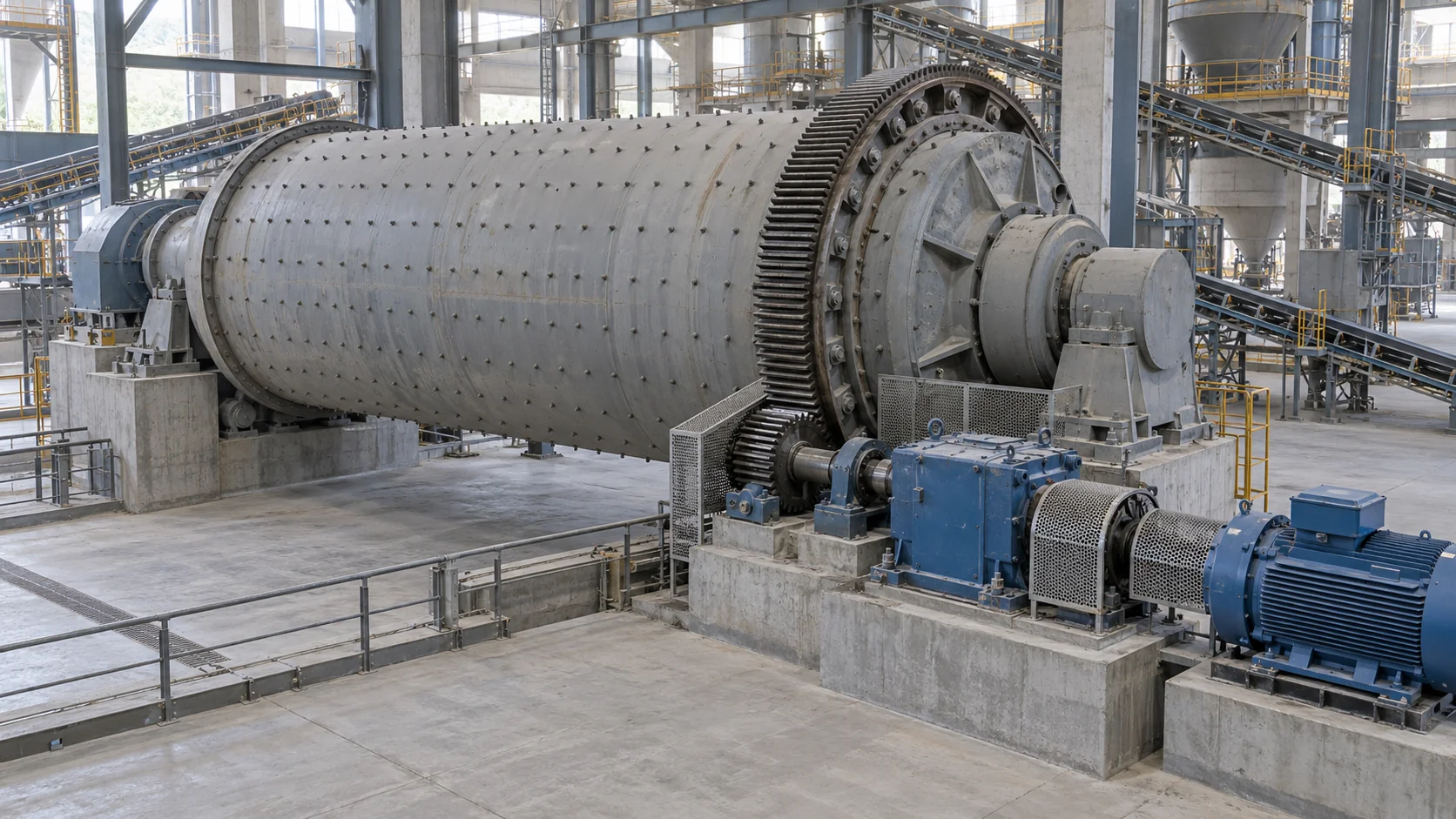
Mills place substantial and sometimes changing loads on their drives. A gearbox used with a ball mill must be assessed against the mill’s actual drive arrangement, starting method, operating speed and load history. Depending on the mill design, torque may be transmitted through a pinion and girth gear or another specified connection.
The drive should be checked for continuous operation and for conditions that differ from steady running. Starting a mill, changing its charge or restarting after a prolonged stop can affect the drivetrain. Motor power alone cannot describe these events.
Grinding performance also depends on the process around the mill. Feed properties, material moisture, media charge and discharge conditions can change the operating load. When a plant investigates a recurring gearbox issue, it should review both the mechanical drive and any changes in mill operation.
Rotary kiln drives
A rotary kiln turns slowly during a continuous thermal process. Its drive must provide the required speed and torque across normal operation, startup and any specified low-speed or maintenance mode.
Kiln drive layouts vary, so the gearbox connection must be confirmed from the equipment drawings. Where a pinion drives a girth gear, alignment and the condition of that gear mesh are part of the wider drivetrain review. Kiln shell movement, support condition and coupling arrangement may also matter to the installed drive.
The gearbox is usually outside the hottest part of the process, but its own ambient conditions still need attention. Heat near the equipment, dust, airflow and maintenance access should be described at the gearbox location rather than inferred from the kiln process temperature.
Cooling and downstream transfer
After thermal processing, cooling equipment and clinker conveyors introduce further drive duties. A rotary cooler gearbox must match the cooler’s required speed, starting load and mechanical connection. Downstream conveying drives must then be considered against material load, starts and installation layout.
The temperature of the material does not by itself determine the gearbox operating temperature. The actual exposure depends on where the drive is installed, the surrounding air and the equipment between the hot material and the gearbox. These conditions should be checked during layout and lubrication planning.
What reliability depends on
Across cement plant applications, gearbox reliability is closely tied to the quality of the original duty description and the condition of the installed drivetrain. The following information should be available when selecting a new unit or reviewing an existing one:
| Information | Why it matters |
|---|---|
| Driven equipment and process duty | Establishes how the machine operates |
| Motor speed, power and starting method | Defines the gearbox input and startup conditions |
| Required output speed and operating load | Supports ratio and continuous torque assessment |
| Peak loads, starts and reversals | Identifies conditions beyond steady running |
| Shaft connection and mounting arrangement | Allows the installed drivetrain to be checked |
| Ambient temperature, dust and operating hours | Supports lubrication, sealing and thermal review |
Once equipment is operating, trends in temperature, vibration, lubrication condition and unusual noise can help maintenance teams identify developing problems. Those observations are most useful when compared with the machine’s normal readings and recent changes in process duty.
Changzheng Machinery’s heavy equipment catalog includes ball mills, rotary kilns, rotary coolers and conveying equipment used in industrial processing. For any particular cement plant, the gearbox configuration should be determined from the selected machine and its documented operating conditions.